

Cruelty-Free Certification: What It Means and How to Check
Cruelty-free certification is a third-party verification that a brand does not test its cosmetics on animals, and in the strongest programs, that its suppliers do not either. In the United States, no law defines the phrase “cruelty-free”, so a logo from a recognized certifier is the most reliable signal on a label. This guide covers what the main programs require, how they differ, what certification does not tell you, and how to verify a claim in a few minutes.
TL;DR
- No US legal definition of “cruelty-free” exists, so an unverified claim on packaging proves little.
- Leaping Bunny and PETA are the two programs US shoppers meet most often. Both ask for a worldwide, forward-looking ban on animal testing, but their processes differ.
- Cruelty-free does not mean vegan, hypoallergenic or safe for sensitive skin. Each of those needs its own check.
- Verify by searching the certifier’s own database, not by trusting a logo on a box.
Table of Contents
- What cruelty-free certification means
- What certifiers actually check
- Leaping Bunny and PETA compared
- What certification does not tell you
- What US law says
- How to verify a brand in five steps
- How companies get certified
- Our perspective
- Shop gentle, cruelty-free formulas
- FAQ
- Sources
What cruelty-free certification means
A certification is a promise a company makes to an outside body, which then checks it. The company agrees to rules about animal testing on ingredients, formulations and finished products. The certifier lists the company, lets it use a logo, and in some programs audits it.
The term itself is loose. Humane World for Animals notes that “cruelty-free” is not always used consistently and that some claims may not cover ingredients or suppliers. The FDA says the same from the regulatory side: it has no legal definition for the term, so a manufacturer can use it even when ingredients were tested on animals years earlier and no new tests are running.
The FDA also points to a common gap. Some companies apply the claim only to the finished product while raw material suppliers or contract labs test on animals to support safety. This is why the details of a certification matter more than the word itself.

What certifiers actually check
A credible program looks beyond the brand’s own lab. Four areas matter:
- Finished products. No animal tests on the product the shopper buys.
- Ingredients and formulations. No tests on individual ingredients or blends.
- Suppliers and third parties. Raw material makers and contract labs must also stay clear of animal testing, usually through signed declarations.
- Geography and timing. The ban applies anywhere in the world, from a set date forward.
The fixed date is called a cut-off date. Ingredients may have been tested in the past. What counts is that the company and its suppliers commit to no new tests from that point on. PETA states this directly: its logo represents a ban on animal testing from the time a company is approved and going forward.
Supply chains are where claims tend to fail. A single outdated supplier statement can break compliance. Guidance for Leaping Bunny licensees says that incorrect declarations are the most common cause of non-compliance, and it advises renewing supplier declarations at least annually. The same logic applies when you read ingredient lists: even a simple product such as a lip balm has several suppliers behind it, and natural lip balm ingredients are a good example of how many sources one short formula can draw on.
Leaping Bunny and PETA compared
These are the two programs most US readers will see. Their goals overlap, but the paperwork, the monitoring and the logo rules differ.
| Criterion | Leaping Bunny | PETA Beauty Without Bunnies |
|---|---|---|
| Operated by | Cruelty Free International (global program); the Coalition for Consumer Information on Cosmetics runs it in North America | PETA |
| Core promise | No animal testing on ingredients, formulations or finished products, worldwide, from a fixed cut-off date | Company and suppliers verify no animal tests are conducted, commissioned or paid for, worldwide, now and in future |
| Supply chain | Brands examine supply chains to ingredient level | Supplier agreements confirming no animal testing |
| Oversight | Annual independent audits under the global approval program | Signed statement of assurance from the company |
| Vegan option | Not part of the standard | Separate cruelty-free-and-vegan designation |
| Cost to apply (US) | Free for US and Canadian companies | Listing is free; the logo is licensed for a fee |
Cruelty Free International describes its approval programme as requiring a fixed cut-off date, supply-chain checks down to ingredient level, international application of the criteria and annual independent audits. It also states that its criteria are stricter than current laws, including in regions with existing bans.
PETA’s route works through a signed statement. According to PETA’s partner page, a cruelty-free designation means the company and its suppliers have verified they do not conduct, commission or pay for animal tests anywhere in the world and pledge not to in the future. Listing is free. Companies that want to put PETA’s bunny logo on packaging pay a licensing fee, and the current amount is on that page.
For a closer look at the first program, see our explainer on what Leaping Bunny is.
Which is the “best” certification?
There is no single answer, because shoppers weigh different things. If you want the most documented supply-chain checking and audits, the Leaping Bunny model is built around that. If you want a brand that is also free of animal-derived ingredients, PETA’s separate vegan designation or a vegan certifier covers that ground. Ethical Consumer notes that The Vegan Society is the certifier that requires products to be free of both animal testing and animal ingredients.
The practical rule: pick the standard that matches your priorities, then check that the specific brand appears in that program’s database.
What certification does not tell you
It does not mean vegan
Cruelty-free speaks about testing. Vegan speaks about ingredients. Humane World for Animals states that cruelty-free products may still contain animal-derived ingredients. Beeswax, lanolin, carmine and some forms of collagen are common examples in lip and face products. PETA’s program keeps the two labels separate for this reason: avoiding animal testing does not answer whether a formula contains animal ingredients.
If both matter to you, read the ingredient list as well as the logo. Our guide to cruelty free vs vegan walks through the double check, and the squalane checklist shows how a single ingredient can come from plants or animals.
It does not mean safe for sensitive skin
No certification evaluates irritation, allergen content or skin tolerance. A cruelty-free lipstick can still contain fragrance or a preservative that bothers reactive skin. For that, use a patch test. Our 48 hour patch test guide explains the steps, and the list of skincare ingredients to avoid helps you scan labels without panic.
It does not mean ethical sourcing across the board
An animal-testing certificate says nothing about labor conditions or mining practices. Mica is the usual example, covered in our piece on mica in makeup.
What US law says
Animal testing of cosmetics is still legal at the federal level in the US. The FDA’s position is that the claim has no legal definition, which leaves room for loose marketing language.
Federal legislation has been proposed. The Humane Cosmetics Act of 2025, introduced in the House in February 2025, would substantially restrict animal testing for cosmetics. A bill’s introduction is not a law, so check Congress.gov for its current status.
Several states have acted on their own. Newsweek reported that a dozen states have cosmetics testing or sales restrictions, including California, Illinois, Maine, Maryland, Nevada, New Jersey, New York, Oregon, Virginia and Washington. State bans differ in scope, and they do not replace certification. A state law covers what is sold in that state. A certification program applies a company’s own commitments worldwide and, in the stricter programs, checks them.
How to verify a brand in five steps
Logos on products can be misleading or unverified. Humane World for Animals advises checking the certifier’s official database or researching supplier policies, rather than relying on vague packaging claims.
- Find the exact claim. “Cruelty-free”, “not tested on animals” and a bunny logo are three different things. Note which one the brand uses.
- Identify the logo. Several rabbit-shaped logos exist, and not all belong to a third-party program. A brand can also design its own.
- Search the certifier’s database. Look up the brand name on the Leaping Bunny or PETA site. Confirm the brand, not only its parent company.
- Check the parent company. Some certified brands belong to groups that sell other products in markets requiring animal tests. Each program handles this differently, so read the parent-company policy.
- Read the brand’s own policy page. A strong policy names suppliers, the cut-off date and the scope. A weak one repeats the phrase without detail.
For a deeper walk-through of one program, see 4 checks to verify Leaping Bunny certification.
Red flags on a label
- A bunny image with no program name or certification number.
- “Not tested on animals” with no mention of ingredients or suppliers.
- “Cruelty-free” on one product while the brand’s other lines are unlisted.
- A brand that cannot be found in any database and gives no policy page.
How companies get certified
The path is similar across programs. A company submits its product list and supplier information, signs a binding commitment, and collects declarations from every supplier and manufacturer. For PETA, the company applies through the Beauty Without Bunnies program and provides a CEO-signed statement of assurance plus supplier agreements. For Leaping Bunny, the application is free for US and Canadian companies and runs through an online account where progress can be tracked.

The heavy part is the supply chain. A brand with twenty ingredients may need declarations from every one of them, renewed each year. This effort is why a verified logo has value, and why a bare claim does not.
Our perspective
We formulate for sensitive skin, and we treat animal-testing standards as one layer of a wider check. In our experience, shoppers with reactive skin get the best results when they separate three questions: was this tested on animals, does it contain animal-derived ingredients, and will my skin tolerate it. A logo answers the first at best.
Our positioning is clean, cruelty-free formulas built for sensitive skin, with nourishing natural ingredients aimed at dryness and fatigue. We encourage every reader to confirm any brand’s status in the certifier’s own database, ours included, and to read the ingredient list for the second and third questions. Our guides on a cruelty-free skincare routine and a vegan skincare routine apply the same method to daily products.
— Miranda Carmichael
Shop gentle, cruelty-free formulas
Maison Dovellé sells clean, cruelty-free beauty for sensitive skin across four collections: eyes, lips, face and accessories. Products combine skincare and makeup, designed to hydrate and nourish rather than only cover.
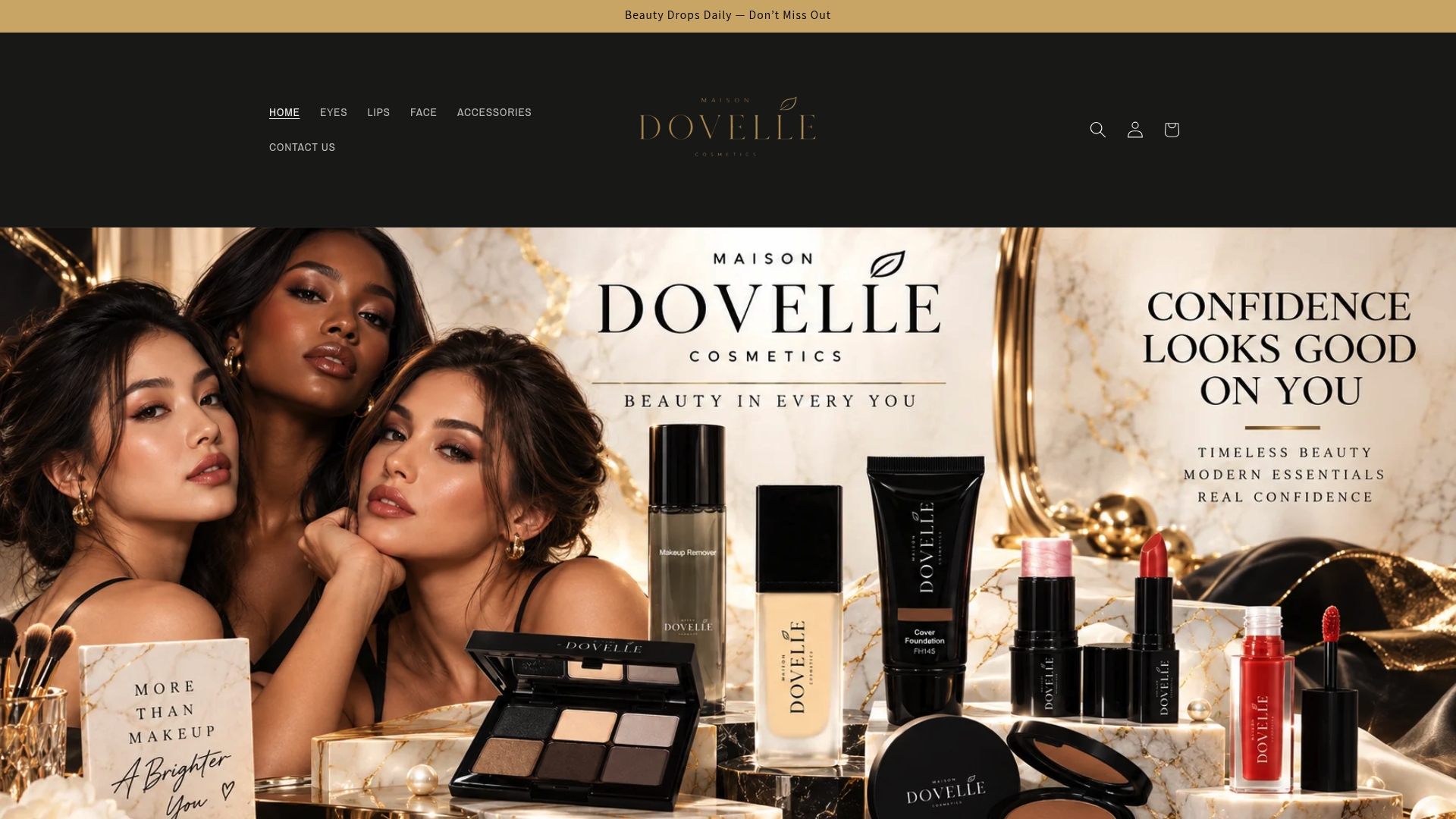
Good starting points are the Active Eye Cream for tired-looking eyes and the Vegan Lip Balm for dry lips. Prices are on each product page.
FAQ
What is the best cruelty-free certification?
No single program wins on every point. Leaping Bunny is built around supply-chain checking and annual audits. PETA offers a free listing and a separate vegan designation. Choose by what you care about, then confirm the brand in that program’s database.
What is a cruelty-free certificate?
It is proof that a third-party program accepted a company’s commitment not to test on animals, and in many cases its suppliers’ commitments too. It usually comes with a logo and a public listing. It is not a government document, because US law has no formal definition of the term.
What does PETA certified cruelty-free mean?
The company and its suppliers have verified that they do not conduct, commission or pay for animal tests on ingredients, formulations or finished products anywhere in the world, and pledge not to do so in the future. The separate cruelty-free-and-vegan designation also requires the whole product line to be free of animal-derived ingredients.
How do companies get certified by PETA?
They apply through the Beauty Without Bunnies program with company and product details, a CEO-signed statement of assurance and supplier agreements. Listing is free. Using the PETA logo requires a licensing fee, which is shown on PETA’s partner page.
Sources
- A consumer guide to cruelty-free products, Humane World for Animals
- “Cruelty Free”/“Not Tested on Animals”, FDA
- Cruelty Free International Approval Programme
- Partner with PETA
- About PETA’s Ultimate Cruelty-Free List
- PETA Frequently Asked Questions
- The Leaping Bunny Programme, supplementary guidance for licensees
- A guide to cruelty-free and animal testing certifications, Ethical Consumer
- H.R.1657, Humane Cosmetics Act of 2025, Congress.gov
- Animal Testing Map Shows 12 States With Cosmetics Ban, Newsweek
- Natural Lip Balm Ingredients: What to Look For and Avoid