

4 Product Vegan Skincare Routine That Avoids Common Allergens
Follow this every day: cleanse, treat, moisturize, and apply sunscreen each morning; cleanse, treat, and moisturize again at night. That is the whole framework. Adjust texture and ingredients for your skin type, and give any new product at least 2 to 4 weeks before deciding whether it works.
TL;DR:
- Choosing vegan skincare does not mean the products are automatically gentler; formulation and ingredient quality are key.
- Routine adjustments are essential for seasonal changes, with lighter products in summer and richer creams in winter, while sunscreen remains daily.
- Patch testing new products is crucial, especially for lanolin, fragrance, and preservatives, to prevent allergic reactions.
- Using a simple, consistent four-item routine for at least four weeks yields better results than complex, short-term attempts.
- Effective vegan actives include niacinamide, hyaluronic acid, bakuchiol, ceramides, and peptides, while animal-derived ingredients like lanolin and beeswax should be avoided.
Table of Contents
- What Does a Vegan Skincare Routine Look Like Step by Step?
- How Do I Adjust My Routine for My Skin Type?
- Should I Change My Routine by Season?
- What Ingredients Should a Vegan Skincare Routine Include or Avoid?
- How Should I Layer Products Without Overloading My Skin?
- What Should I Do If a New Product Causes a Reaction?
- Which Maison Dovelle Products Fit Each Step?
- How Do I Add Exfoliation and Masks Without Irritating My Skin?
- How Do I Target Hyperpigmentation, Flare-Ups, or Anti-Aging Concerns?
- Consistency Beats Complexity in Vegan Skincare
- Build Your Vegan Routine With Maison Dovelle
- Where to Read More on Vegan Skincare Safety
- Sources
- FAQ
What Does a Vegan Skincare Routine Look Like Step by Step?
A vegan skincare routine is built the same way any good routine is: fewer products, applied in the right order, used consistently. The only difference is that every item in the lineup skips animal-derived ingredients like lanolin, beeswax, or carmine. This is what that looks like in practice.
Morning routine:
- Cleanse with a gentle, low-foam cleanser to remove overnight oil buildup without stripping the skin barrier.
- Treat (optional) with a vitamin C or niacinamide serum, applied to slightly damp skin for better absorption.
- Moisturize with a lightweight lotion or gel cream suited to your skin type.
- Protect with a broad-spectrum mineral sunscreen, applied as the last step, every single day regardless of season or cloud cover.
Evening routine:
- Double-cleanse if you wore sunscreen or makeup: start with an oil-based cleanser to dissolve product, then follow with a water-based cleanser to clear residue. Skip the first step on bare-skin days.
- Treat with your targeted serum, retinoid alternative, or exfoliating acid, rotating actives rather than stacking them all at once.
- Moisturize with a richer cream than you use in the morning, since skin repairs itself overnight and tolerates heavier textures better in the dark.
- Seal with a facial oil if your skin runs dry, applied last since oils are the heaviest layer in any routine.
If you are starting from zero, a four-item shopping list covers the essentials: a gentle cleansing oil for makeup and sunscreen removal, one treatment serum, a moisturizer suited to your skin type, and a mineral sunscreen. That is genuinely enough. Adding more products before you know how your skin responds to these four usually creates more problems than it solves.
How Do I Adjust My Routine for My Skin Type?
The core sequence stays fixed. What changes is texture, active ingredients, and what you deliberately leave out.
- Dry skin: prioritize cream-based cleansers and moisturizers with ceramides or squalane (plant-derived), and layer a facial oil at night. Avoid foaming cleansers with sulfates, which strip the lipid barrier.
- Oily skin: choose a gel or water-based moisturizer labeled non-comedogenic, and use niacinamide serums to regulate oil production. Skip heavy occlusive oils during the day.
- Combination skin: apply a lighter gel moisturizer overall, and spot-treat drier patches with a richer cream only where needed rather than across the whole face.
- Sensitive skin: stick to fragrance-free formulas and short ingredient lists. The American Academy of Dermatology recommends choosing moisturizer texture based on your skin’s actual needs rather than trends, and applying it to damp skin for better results.
- Acne-prone skin: look for gel textures with salicylic acid or niacinamide, and avoid coconut-derived oils, which are comedogenic for many people.
- Mature skin: favor richer creams with peptides or bakuchiol, a plant-based retinol alternative, and be patient. Fine lines and texture respond more slowly than hydration does.
Pro Tip: “Vegan” and “natural” do not mean hypoallergenic. Plenty of plant-derived ingredients, including certain essential oils, cause more irritation than synthetic ones. Judge a product by its actual ingredient list, not its marketing label.
Should I Change My Routine by Season?
Yes, and this is where a lot of otherwise-good routines start causing problems. Skin’s needs shift with humidity, temperature, and how much time you spend indoors under dry heat or outdoors under UV exposure.
- Summer: switch to a lighter, gel-based moisturizer and skip heavy oils during the day, since sweat and higher oil production already do some of the job. Reapply sunscreen every two hours if you are outdoors.
- Winter: move to a richer cream and add an occlusive layer, like a facial oil or balm, at night to counter dry indoor heat. Cut exfoliation back to once a week if your skin feels tight or flaky.
- Travel: pack a compact three-item kit: cleanser, moisturizer, and sunscreen in travel sizes, plus a single treatment serum if you are staying longer than a few days. Keep sunscreen in your carry-on rather than checked luggage so cabin dryness does not catch you without it.
- High humidity or high altitude: both extremes dehydrate skin faster than people expect. Increase hydrating serums with hyaluronic acid and reduce active ingredient frequency temporarily.
Sunscreen is the one constant. It stays in the routine every day, in every season, indoors or out.
What Ingredients Should a Vegan Skincare Routine Include or Avoid?
Reading a label is the real skill here, more than knowing brand names. Certain ingredients do heavy lifting for hydration and repair, while others show up under names most people do not recognize as animal-derived or as common sensitizers.
Vegan-friendly actives worth seeking out:
- Niacinamide for oil regulation and barrier support
- Hyaluronic acid for hydration at multiple molecular weights
- Bakuchiol as a gentler alternative to retinol
- Plant-derived ceramides and peptides for barrier repair and firmness
Animal-derived ingredients to watch for on labels:
- Lanolin, often listed as wool alcohols or adeps lanae, is one of the most common contact allergens in skincare and shows up under several synonyms
- Beeswax (cera alba)
- Carmine, a red pigment derived from crushed insects, common in tinted products
- Animal-derived squalane (look for “squalane” sourced from olives or sugarcane instead)
Sensitizers that trip up even careful buyers:
- Fragrance and parfum, which can mask dozens of individual compounds
- Oxidized limonene or linalool, citrus-derived compounds that turn into potent allergens once exposed to air
- Imidazolidinyl urea and other formaldehyde-releasing preservatives, established contact sensitizers worth avoiding if you have reactive skin
There is no federal legal definition of “vegan” or “cruelty-free” on cosmetics in the United States. The FDA treats both terms as manufacturer claims, not regulated categories, which means the ingredient list matters more than the front-of-bottle label. Third-party certifications like Leaping Bunny add a layer of independent verification that a marketing claim alone does not.
How Should I Layer Products Without Overloading My Skin?
Order runs thinnest to thickest: water-based serums first, creams next, oils and balms last. Sunscreen always goes on top in the morning, after moisturizer has fully absorbed.
- Cleanser removes surface debris and prepares skin for everything after it.
- Treatment serums absorb best on clean, slightly damp skin, before heavier products block penetration.
- Moisturizer locks in hydration and creates a base layer.
- Facial oil (PM only, if needed) seals everything underneath and slows water loss overnight.
- Sunscreen (AM only) always goes last, since it needs to sit undiluted on the skin’s surface to work.
Wait about a minute between a serum and a moisturizer so each layer absorbs before the next goes on; skipping the wait is fine with lightweight, fast-absorbing formulas but causes pilling with thicker ones. When adding a new active, introduce one product at a time and hold for at least two weeks before adding another. Stacking three new actives in the same week makes it impossible to tell which one caused a reaction if something goes wrong.
What Should I Do If a New Product Causes a Reaction?
Patch test first, every time. Apply a small amount to the inner forearm or behind the ear, wait two days, and check for redness, itching, or bumps before putting anything new on your face.
- Watch specifically for lanolin, oxidized fragrance components, and formaldehyde-releasing preservatives like imidazolidinyl urea. These account for a large share of documented contact allergy cases.
- If a mild reaction happens on your face, stop using the product immediately, rinse with cool water, and simplify your routine to cleanser and moisturizer only for a few days.
- Breakouts that appear within 48 to 72 hours of a new product often point to a comedogenic ingredient, not necessarily an allergy. Breakouts that show up after a week or two are more likely tied to over-exfoliation or barrier disruption.
- See a dermatologist if a reaction includes swelling, blistering, spreading redness, or symptoms that persist beyond a week after you stop using the suspected product.
Which Maison Dovelle Products Fit Each Step?
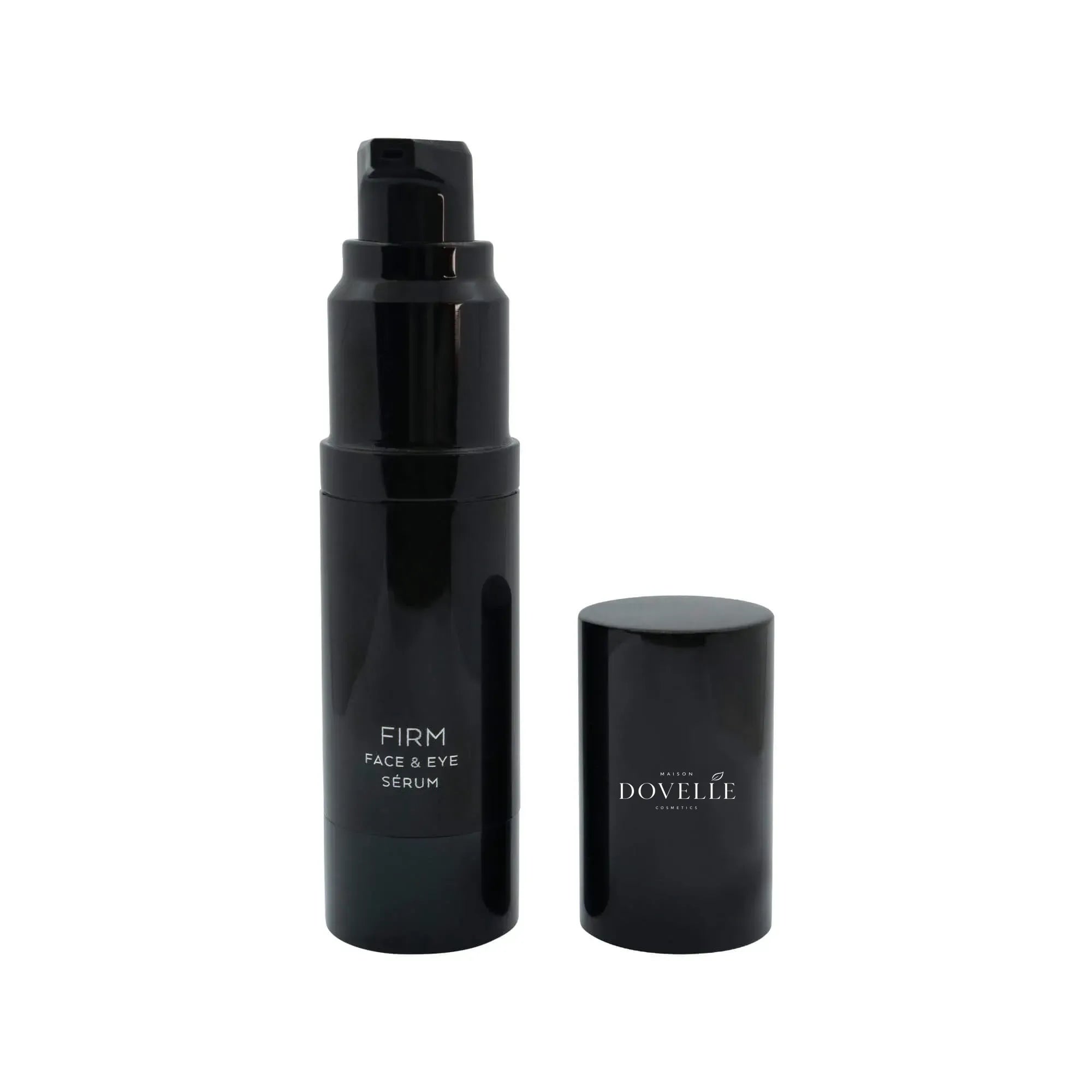
Building a full routine gets easier once you can map real products to real steps instead of guessing. Cleansing Oil works as the first pass in a PM double-cleanse, dissolving sunscreen and makeup gently before a water-based cleanser finishes the job. Soothing Emulsion fills the moisturizer step for dry or sensitive skin, formulated for comfort rather than heavy fragrance. Firm Serum slots into the treatment step, aimed at mature skin and texture concerns rather than active breakouts. Each product is formulated for sensitive skin using clean, cruelty-free ingredients, which matters most in exactly the steps where irritation risk runs highest: cleansing and active treatment.
How Do I Add Exfoliation and Masks Without Irritating My Skin?
Exfoliation and masking are optional add-ons, not daily requirements, and this is where most routines go wrong. Chemical exfoliants like AHAs or BHAs are best limited to a few uses per week for most skin types; sensitive skin often does better at less frequent use.
Choose one exfoliation method, not several. A glycolic or lactic acid toner and a physical scrub on the same day is a common way people accidentally strip their barrier and then blame a totally different product for the resulting redness. If you already use a retinoid-alternative like bakuchiol at night, skip exfoliating acids on those same nights, since both increase cell turnover and stacking them raises the odds of peeling or sensitivity.
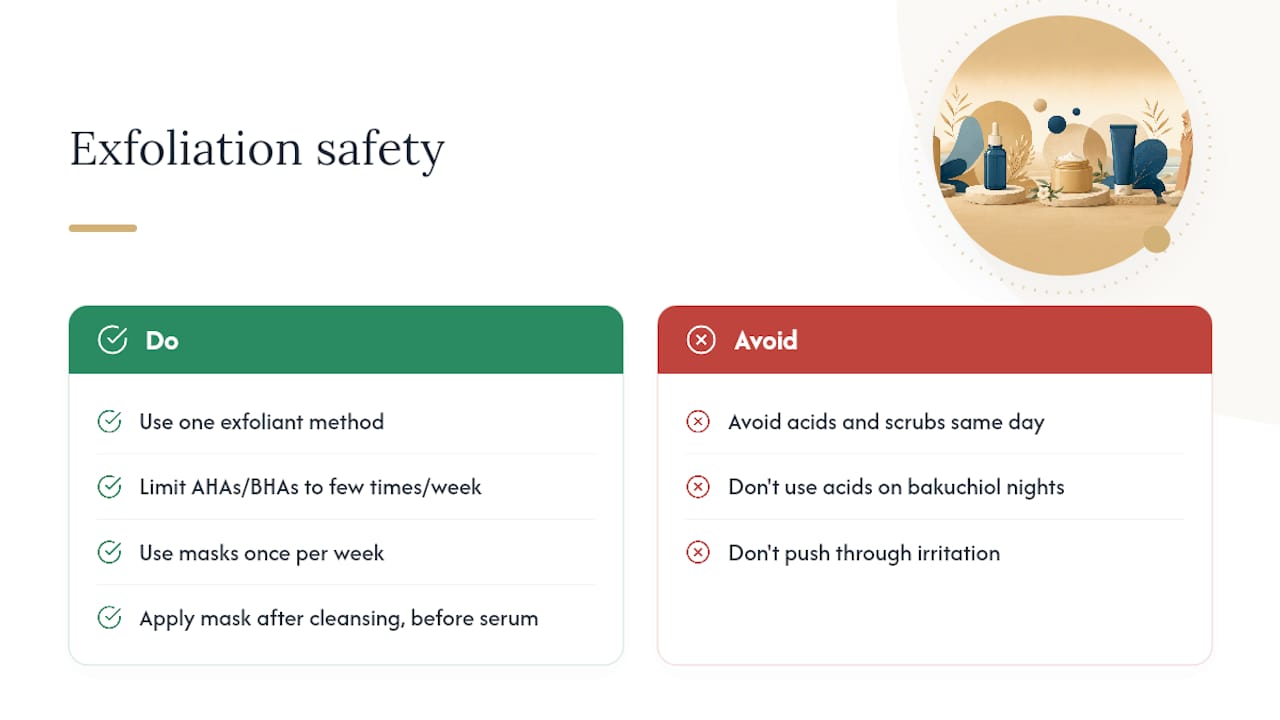
Masks fit better as a once-a-week reset than a daily step. Clay masks work well for oily or combination skin to absorb excess sebum, while hydrating gel masks suit dry or dehydrated skin. Apply masks after cleansing and before your treatment serum, since a mask’s job is to prep skin, not layer on top of active ingredients that are already working.
If your skin feels tight, red, or unusually sensitive after introducing exfoliation, that is a signal to pull back frequency, not push through it. Over-exfoliated skin often looks temporarily “brighter” right before it starts breaking down, which is exactly why people tend to increase frequency at the worst possible moment.
How Do I Target Hyperpigmentation, Flare-Ups, or Anti-Aging Concerns?
Layer a targeted treatment onto the base routine rather than replacing the routine itself. For hyperpigmentation, a vitamin C serum in the morning paired with niacinamide addresses discoloration from two different angles: vitamin C works on pigment production, niacinamide calms inflammation that can worsen dark spots. Give this combination 8 to 12 weeks before judging results, since pigment changes move slower than hydration does.
For sensitivity flare-ups, strip the routine back temporarily to cleanser, a fragrance-free moisturizer, and sunscreen only. Adding actives back in during a flare-up almost always extends the flare rather than shortening it.
For anti-aging concerns, bakuchiol and peptides are the two vegan-friendly actives with the most consistent track record for texture and firmness. Introduce one, not both, and expect the same 8 to 12 week window before texture visibly changes. Fine lines and firmness respond on a slower timeline than surface hydration, so judging a new anti-aging product after two weeks almost guarantees disappointment that has nothing to do with whether the product actually works.
Consistency Beats Complexity in Vegan Skincare
The biggest mistake in vegan skincare has nothing to do with ingredients and everything to do with restraint. People build ten-step routines within their first month, cannot isolate what is working or causing irritation, and abandon the whole approach in frustration. A four-product routine, followed daily for a month, beats an elaborate one followed inconsistently for a week.
Ethics and sensitivity do occasionally pull in different directions. Some plant-derived ingredients, especially certain essential oils, irritate more than the synthetic alternatives they replace. Choosing vegan does not automatically mean choosing gentler, and pretending otherwise sets people up for unnecessary breakouts. The honest approach is picking formulas that are both cruelty-free and fragrance-free, then giving them real time. Two weeks tells you about tolerance. Eight to twelve weeks tells you about results.
— Miranda Carmichael
Build Your Vegan Routine With Maison Dovelle
Maison Dovelle’s advantage is straightforward: every formula is built for sensitive skin from the start, using clean, cruelty-free ingredients, so you get visible results without weighing skincare against ethics. That matters most in exactly the steps this routine flags as highest-risk: cleansing and active treatment.
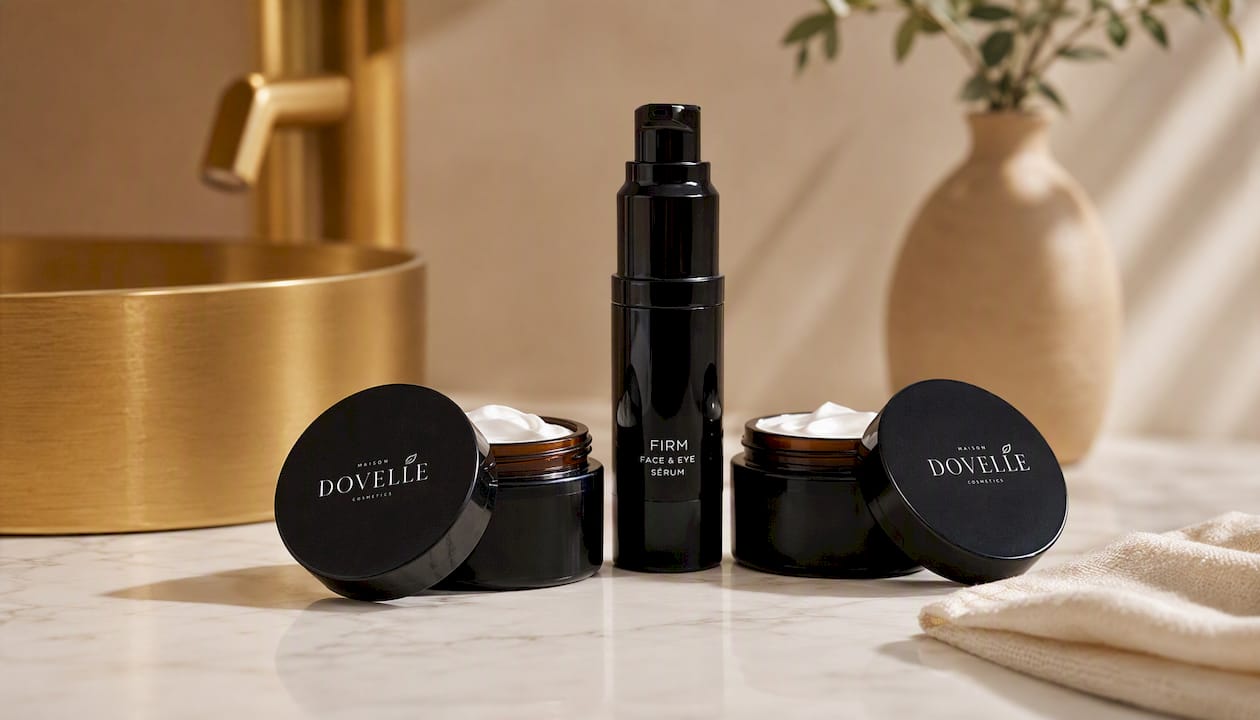
For the treatment step, Firm Serum targets texture and mature-skin concerns, while the Men’s Under Eye Cream addresses the eye area specifically, a spot most routines neglect entirely. The Men’s Face Moisturizer covers the daily hydration step for anyone who wants a straightforward, no-fuss option. Browse the full Face collection alongside Eyes, Lips, and Accessories to fill out the rest of your routine. Patch-test any new product on your inner forearm for 48 hours before adding it to your face, then give it the full two to four weeks this article recommends before judging the results.
Where to Read More on Vegan Skincare Safety
- FDA cosmetics labeling guide for understanding required label disclosures
- American Academy of Dermatology on moisturizers for skin-type-specific guidance
- DermNet on contact allergens for allergy identification and patch-test protocols
- Leaping Bunny certification for verifying cruelty-free claims independently
Sources
- DermNet — Allergy to imidazolidinyl urea
- FDA — Cruelty-free and ‘not tested on animals’ cosmetics claims
- American Academy of Dermatology — How to pick the right moisturizer
- DermNet — Contact allergy to limonene and linalool
- FDA — Cosmetics Labeling Regulations
FAQ
What Is the “4-2-4” Rule in Skincare?
The 4-2-4 rule refers to a simplified way of thinking about routine timing: roughly 4 weeks to judge hydration and texture changes, 2 weeks minimum before adding a second new active, and up to 4 months for deeper concerns like scarring or significant pigmentation. The core principle matches standard dermatology guidance to wait at least two weeks before judging any new product and longer for slower-moving concerns.
What Ingredients Should Be Avoided in Vegan Skincare?
Avoid animal-derived ingredients like lanolin, beeswax, carmine, and animal-sourced squalane, all of which have plant-based alternatives. Beyond the vegan question, watch for common sensitizers like fragrance, oxidized limonene or linalool, and formaldehyde-releasing preservatives such as imidazolidinyl urea, which are established contact allergens regardless of whether a product is vegan.
What Are the Best Vegan Skincare Brands?
The strongest vegan skincare brands combine a fully plant-based or synthetic-alternative ingredient list with fragrance-free, sensitive-skin-friendly formulation rather than relying on the vegan label alone. Maisondovelle formulates its EYES, LIPS, and FACE lines around clean, cruelty-free ingredients specifically for sensitive skin, which addresses both the ethical and the tolerability side of the question at once.
Is Vegan Skincare Better for Your Skin?
Not automatically. Vegan simply means no animal-derived ingredients, not that a formula is gentler or more effective than a non-vegan equivalent. The ingredient list and formulation quality determine how well skin tolerates a product, not the vegan label by itself, since the FDA does not regulate or define that term on cosmetics.
How Long Does It Take to See Results From a New Vegan Skincare Product?
Most people notice improved hydration and texture within 2 to 4 weeks of consistent use. Deeper concerns like hyperpigmentation or fine lines typically need 8 to 12 weeks before changes become visible, so judging a product before that window closes usually leads to an inaccurate conclusion.