

Barrier First Rosacea Skincare Routine With 48–72 Hour Patch Test
A minimal, twice-daily routine built around a gentle cleanser, a ceramide-rich moisturizer, and daily mineral sunscreen is the most reliable starting point for rosacea-prone skin. Apply any prescribed topical medication first, moisturize after, and skip fragrance, alcohol, menthol, and abrasive scrubs entirely. Patch-test every new product for at least 48 hours before it touches your face, since a calm, barrier-first approach beats a crowded shelf of actives almost every time.
TL;DR:
- A gentle, barrier-focused routine with minimal actives, including a non-foaming cleanser, ceramide-rich moisturizer, and SPF 30+ mineral sunscreen, is most effective.
- It is crucial to patch-test new products for at least 48 hours and reintroduce actives gradually, avoiding multiple new products at once.
- Sun exposure is the primary trigger for flare-ups, making daily mineral SPF and protective clothing essential for management.
- Rosacea sufferers should avoid alcohol, fragrance, witch hazel, menthol, and harsh surfactants, which can worsen skin irritation.
- Consulting a dermatologist is advised if symptoms worsen or persist after several weeks of consistent, gentle skincare, with prescription treatments potentially necessary.
Table of Contents
- Building a Morning Rosacea Skincare Routine
- Evening Skincare Steps for Calming Rosacea
- Which Ingredients Should You Avoid With Rosacea?
- How Do You Safely Test New Skincare Products?
- What Sun and Lifestyle Habits Reduce Flare-Ups?
- When Should You See a Dermatologist for Rosacea?
- Gels, Creams, or Balms: Which Texture Fits Your Rosacea?
- Adjusting Your Routine as Rosacea Severity Changes
- Why Simpler Skincare Often Works Better Than Advanced Skincare
- Maison Dovelle Products That Fit a Rosacea-Safe Routine
- Sources
- FAQ
Building a Morning Rosacea Skincare Routine
Mornings should feel almost boring. That’s the goal. A dermatologist-backed guide from the American Academy of Dermatology recommends cleansing gently twice a day or simply splashing with lukewarm water if your skin looks clean and calm. If you wore no makeup or sunscreen the night before, skip the cleanser altogether and go straight to treatment.
- Assess your skin. If it’s not visibly oily or residue-covered, splash with lukewarm water instead of using a cleanser.
- Cleanse if needed with a non-foaming cream or syndet formula, applied with fingertips only.
- Apply prescribed medication (azelaic acid or ivermectin, for example) to clean, dry skin and wait a few minutes before the next step.
- Moisturize with a cream containing ceramides, niacinamide, or panthenol, patted onto slightly damp skin.
- Apply mineral sunscreen, SPF 30 or higher, using zinc oxide or titanium dioxide as the active ingredient.
- Add makeup, if desired, choosing lightweight or powder formulas over heavy liquid coverage.
Micronized or tinted mineral sunscreens reduce the chalky white cast that turns many rosacea patients off mineral formulas in the first place. A tinted moisturizer can double as light coverage and hydration on days you want a quicker routine.
Pro Tip: Wait a full 60 seconds after applying any prescription treatment before layering moisturizer on top. Rushing this step is one of the most common reasons people report stinging that they blame on the moisturizer itself.
Evening Skincare Steps for Calming Rosacea
Nighttime is when most flare-ups get triggered by well-meaning overcorrection. The fix isn’t more product. It’s the right sequence, done gently.
- Remove makeup and sunscreen with an oil-free micellar water or a gentle emulsion cleanser. Never scrub, and skip textured cleansing cloths.
- Rinse with lukewarm water, massaging with fingertips for 20 to 30 seconds.
- Pat dry with a soft cotton towel. Don’t rub.
- Apply prescribed topical treatments first, if your dermatologist has prescribed one, and wait before the next step.
- Follow with a richer, ceramide-forward moisturizer to support overnight barrier repair.
Hold off on nightly acids or retinoids until your skin has been calm and flake-free for at least a couple of weeks. When you’re ready to reintroduce actives, add one at a time, never a new serum and a new exfoliant in the same week. An anti-aging oil formulated for sensitive skin can work well as that final barrier-sealing step, applied sparingly over moisturizer.
Which Ingredients Should You Avoid With Rosacea?
Reading a label matters more than reading a marketing claim. Surveys tracked by the National Rosacea Society found that 66% to 77% of patients avoid alcohol-based products, while 30% to 64% avoid added fragrance, and roughly 30% steer clear of witch hazel.
- Alcohol (denatured or SD alcohol): dries and inflames already-compromised skin barriers.
- Fragrance and “parfum”: even natural fragrance compounds can trigger stinging.
- Witch hazel: marketed as soothing, but it’s an astringent that dries skin further.
- Menthol and camphor: create a cooling sensation that masks irritation rather than preventing it.
- Sodium lauryl sulfate (SLS): a harsh detergent common in foaming cleansers.
- AHAs and physical scrubs: chemical and mechanical exfoliation both compromise an already-thin barrier.
“Fragrance-free” is a meaningfully different label than “unscented.” Unscented products often contain a masking fragrance to neutralize raw material odor, and that masking compound can still irritate. Choose creams over gels and skip toners and astringents entirely, since both categories exist mainly to strip oil your skin barrier needs.
How Do You Safely Test New Skincare Products?
Rosacea-prone skin punishes trial and error. A structured, slow introduction process protects you from guessing which product caused a flare after the fact.
- Patch-test first. Apply a small amount to your inner forearm or jawline and watch for 48 to 72 hours, since delayed reactions are common with rosacea-prone skin.
- Strip your routine down. For at least two weeks, use only a gentle cleanser, moisturizer, and sunscreen.
- Add one product every two weeks. Never introduce two new items at once, or you won’t know which one caused a reaction.
- Keep a simple diary. Log products, weather, stress levels, and meals alongside any redness or stinging.
This “subtract-and-rebuild” method mirrors clinical guidance tied to the National Rosacea Society’s Seal of Acceptance program, which requires manufacturers to submit human repeat insult patch test data from at least 30 people plus separate safety-in-use data from at least 30 rosacea patients before a product earns that label.
Pro Tip: Photograph your face in the same lighting each morning during a product trial. Redness fluctuates so gradually day to day that memory alone often misses the pattern a photo timeline reveals instantly.
What Sun and Lifestyle Habits Reduce Flare-Ups?
Sun exposure tops nearly every rosacea trigger list. AAD guidance on flare prevention notes that around 81% of patients report sunlight as a trigger, which makes daily mineral SPF less of a suggestion and more of a non-negotiable step.
- Wear broad-spectrum mineral SPF 30+ daily, choosing zinc oxide or titanium dioxide formulas without added fragrance.
- Look for silicone-containing sunscreen bases, which can feel less greasy and reduce friction during application.
- Add a wide-brim hat, sunglasses, and shade-seeking during midday hours when UV intensity peaks.
- Sip cool drinks and dress in breathable layers on hot or humid days to limit heat-triggered flushing.
- Keep a cooling cloth on hand during exercise, since heat and stress rank among the most commonly reported non-sun triggers.
None of these habits replace skincare. They work alongside it, and skipping them tends to undercut even a well-built routine.
When Should You See a Dermatologist for Rosacea?
Self-care has limits. See a dermatologist if you notice new or worsening papules and pustules, eye irritation or grittiness, rapid flare progression, or no improvement after weeks of gentle, consistent care.
- Topical prescriptions like azelaic acid, ivermectin, and metronidazole carry high-certainty evidence for reducing papules and pustules.
- Oral medications, including low-dose doxycycline or, in severe cases, isotretinoin, may be added under supervision.
- Brimonidine or oxymetazoline can temporarily reduce visible redness, though effects wear off and require ongoing use.
- Procedural options like IPL or vascular laser treatments often work as adjuncts to skincare and medication, not replacements for either.
Experts recommend a maintenance phase of at least nine months after remission, with daily skincare and sunscreen playing a central role in keeping symptoms from returning.
Gels, Creams, or Balms: Which Texture Fits Your Rosacea?
Texture isn’t a cosmetic preference with rosacea. It changes how a product behaves on compromised skin. Gel formulas often contain more alcohol or gelling agents that can sting on active flares, which makes them a riskier default for most rosacea types.
Cream and lotion textures tend to sit better on rosacea-prone skin because they layer a lipid base over the skin rather than evaporating quickly, which is what often causes that post-application tightness. If your rosacea leans oily or combination, a lightweight cream or lotion, rather than a heavy balm, usually strikes the right balance without clogging pores or feeling greasy.
For drier, more flake-prone rosacea, richer balms and ointment-like textures work harder to lock in moisture overnight. A product like an extreme moisture blend formulated for barrier support fits that heavier category well, especially during colder months or active flares.
Papulopustular rosacea, marked by visible bumps, often does better with lighter, non-comedogenic creams that won’t trap debris around inflamed follicles. Ocular rosacea calls for extra caution around the eye area specifically, favoring fragrance-free, preservative-minimal formulas regardless of texture elsewhere on the face. When in doubt, choose the lighter option and layer more, since it’s easier to add a second thin layer than to recover from an overly rich product that clogs or irritates.
Adjusting Your Routine as Rosacea Severity Changes
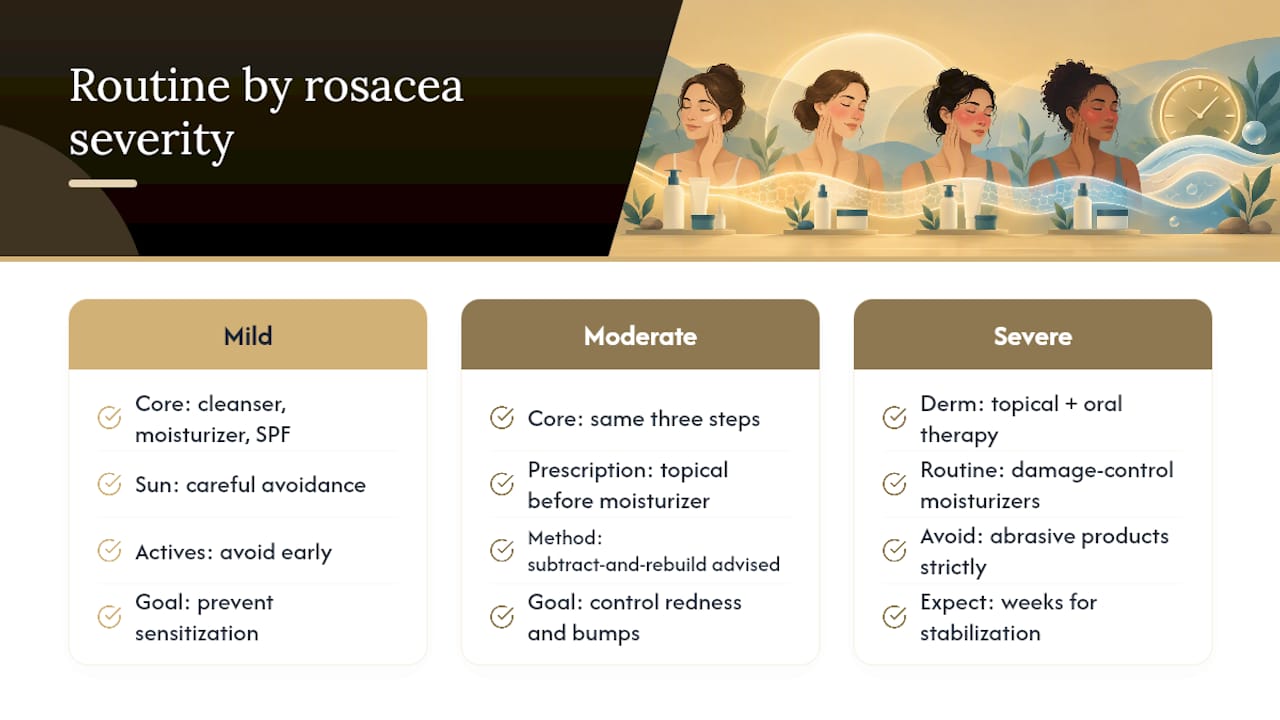
Rosacea isn’t static, and your routine shouldn’t be either. Mild, early-stage rosacea with occasional flushing often does fine with the core three steps: cleanser, moisturizer, sunscreen, plus careful sun avoidance. Adding actives too early at this stage frequently backfires, since skin that isn’t yet reactive can become sensitized by unnecessary treatment.
Moderate rosacea with persistent redness and occasional bumps usually needs a prescribed topical layered into that same three-step frame, applied before moisturizer as outlined earlier. This is also the stage where the subtract-and-rebuild method matters most, since patients at this level are often tempted to add several products at once out of frustration.
Severe or treatment-resistant rosacea typically involves a dermatologist-directed combination of topical and oral medication, and the skincare routine shifts toward damage control. That means richer moisturizers, stricter avoidance of anything abrasive, and patience, since skin in active flare needs weeks, not days, to stabilize.
Skin type matters too. Oily, rosacea-prone skin benefits from lightweight, non-comedogenic creams and gel-cream hybrids without alcohol. Dry, rosacea-prone skin needs the heavier, ceramide-dense end of the moisturizer spectrum, often reapplied midday if tightness sets in. Combination skin usually does best split by zone, a lighter formula on the T-zone and a richer one on the cheeks, where rosacea redness typically concentrates.
Why Simpler Skincare Often Works Better Than Advanced Skincare
The instinct with any skin condition is to research harder and buy more. Rosacea punishes that instinct more than almost any other skin concern I’ve studied. The evidence keeps pointing the same direction: a stripped-down, barrier-first routine outperforms a shelf of serums, and overcomplicated regimens are a documented pattern behind avoidable flare-ups, not an occasional exception.
Where conventional advice falls short is in treating rosacea like a checklist problem, solved once you own the right products. It’s a maintenance condition. The nine-month post-remission window experts recommend tells you this isn’t a routine you finish. It’s one you sustain, season after season, adjusting for heat, stress, and sun exposure as much as for the products themselves.
If you take one thing from this, prioritize consistency over expansion. Get the cleanser, moisturizer, and sunscreen right first. Everything else, including well-formulated options from a sensitive-skin brand, earns its place only after that foundation holds steady for weeks, not days.
— Miranda Carmichael
Maison Dovelle Products That Fit a Rosacea-Safe Routine
Some clean beauty brands formulate for sensitive skin, offering products worth considering once your barrier is stable and your baseline routine is calm. None of them replace a prescribed treatment, but each maps to a specific step in the routine covered above.
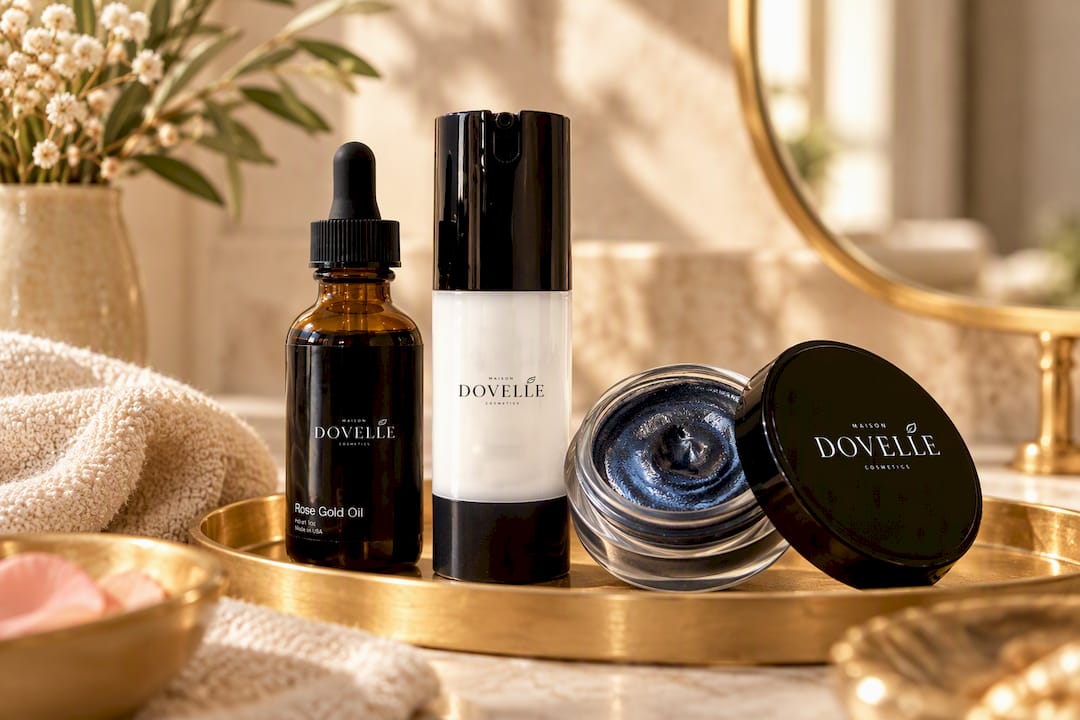
The Anti-aging Rose Gold Oil works as a final evening layer over moisturizer, sealing in hydration without the heaviness of a traditional facial oil. The Extreme Moisture Blend suits the barrier-repair role during dry spells or active flares, when skin needs more than a standard cream can deliver. The Glow Mask fits as an occasional weekly step, not a nightly one, and should only enter your routine after a successful 48 hour patch test on the jawline. Apply a small amount first, watch for 48 to 72 hours, and skip any fragranced variant if your skin reacts to scent generally. Browse the full face collection to build out the rest of your routine, and check the eyes and accessories lines for gentle application tools that limit friction on sensitive skin.
This article is general information, not a substitute for advice from a qualified doctor. Consult a qualified healthcare professional about your own circumstances before acting on anything here.
Sources
- 7 rosacea skin care tips dermatologists recommend — American Academy of Dermatology (2024)
- Pharmaceutical management of rosacea — consensus narrative (2024)
- Long-term maintenance treatment of rosacea: experts’ opinion (2024)
FAQ
What Should You Not Put on Rosacea Skin?
Avoid alcohol, added fragrance, witch hazel, menthol, camphor, and physical scrubs, since these are the most commonly reported irritants among rosacea patients. Toners, astringents, and AHA-heavy exfoliants also tend to compromise an already-thin skin barrier.
What Do Koreans Use for Rosacea?
Korean skincare routines for sensitive, rosacea-prone skin generally favor lightweight, hydrating layers like gentle essences and ceramide-rich creams over heavy, multi-step regimens packed with actives. The core principle mirrors Western dermatology guidance: prioritize barrier support and hydration, and introduce any active ingredient slowly and one at a time.
Should Moisturizer Go Before or After Sunscreen?
Moisturizer goes on before mineral sunscreen, applied to slightly damp skin so the product absorbs rather than sitting on top. If you’re using a prescribed topical medication, apply that first, wait a few minutes, then moisturize, and finish with sunscreen as your last morning step, per AAD guidance.
Should You Wash Your Face Every Day With Rosacea?
You don’t necessarily need a full cleanser both morning and night. Dermatologists often recommend splashing with lukewarm water in the morning if your skin looks clean, and reserving actual cleansing for the evening to remove makeup, sunscreen, and environmental residue.
When Should Rosacea Skincare Include Prescription Treatment?
If gentle, consistent skincare hasn’t improved persistent redness or bumps after several weeks, or if you notice new pustules, eye irritation, or rapid worsening, it’s time to see a dermatologist. Topical options like azelaic acid and ivermectin carry strong evidence for reducing visible symptoms when paired with a barrier-first routine.