

Heal Peeling Lips: Dermatologist Routine for Sensitive Skin
The fastest peeling lips remedy is frequent application of a bland, petrolatum-based ointment, applied in a thick layer overnight, combined with stopping any licking or picking and shielding lips from sun and wind. Skip minty or flavored balms while healing. Most people see real improvement within two to three weeks of consistent care. If peeling persists past that window or looks infected, see a dermatologist.
TL;DR:
- Applying a thick petrolatum-based ointment overnight and reapplying frequently during the day is essential for healing peeling lips within two to three weeks.
- Environmental factors like wind, sun, and low humidity, along with habits such as licking, biting, or excessive lip product use, significantly worsen peeling without proper care.
- Most cases respond well to a simple routine of gentle cleansing, avoiding irritants, and protecting lips from sun and dehydration, but persistent cases may require dermatologist evaluation.
- Ingredients like glycerin, dimethicone, ceramides, and hyaluronic acid support healing, while menthol, cinnamon, and fragrances should be avoided until recovery.
- Treat underlying causes like dehydration, vitamin deficiencies, or allergic reactions to prevent the recurrence of peeling lips.
Table of Contents
- Immediate Steps to Stop Lips From Peeling
- Why Are My Lips Peeling?
- What’s the Best Lip Balm for Peeling Skin?
- How Do You Stop Lips From Peeling for Good?
- When Should You See a Dermatologist About Peeling Lips?
- A Dermatologist-Style Routine You Can Actually Stick To
- Can Your Diet Cause Peeling Lips?
- Medical Conditions That Cause Peeling Lips
- What Actually Moves the Needle on Peeling Lips
- Gentle Lip Color for After Your Lips Heal
- Sources
- FAQ
Immediate Steps to Stop Lips From Peeling
Peeling lips respond well to a short, boring routine done consistently. Skip anything exciting or tingly. Here’s the order that works:
- Cleanse gently. Use lukewarm water or a mild, fragrance-free cleanser. No scrubbing, no washcloths, no exfoliating brushes.
- Apply a petrolatum-based ointment several times a day. Reapply after eating, drinking, or talking a lot.
- Layer it on thick before bed. An overnight coat traps moisture while you sleep, when you can’t reapply.
- Leave the peel alone. Pulling at loose skin tears healthy tissue underneath and resets the healing clock.
- Switch to fragrance-free personal care products. That includes toothpaste, lipstick, and any lip product with a scent or flavor.
- Wear SPF 30+ lip balm outdoors, and reapply it every two hours if you’re outside for a while.
Pro Tip: Keep a plain ointment stick in every bag, coat pocket, and car console. The routine only works if reapplying takes less effort than reaching for lip balm out of habit.
Why Are My Lips Peeling?
Lips peel because the skin there has no oil glands and almost no protective barrier, so it dries out faster than the rest of your face. A few forces usually combine to cause it.
Environmental triggers:
- Cold air, wind, and low indoor humidity pull moisture straight out of the lips
- Unprotected sun exposure damages the thin skin further and slows healing
Behavioral triggers:
- Licking your lips feels soothing for a second, but saliva evaporates fast and leaves lips drier than before, while its enzymes irritate already-compromised skin
- Picking or biting flakes tears healthy tissue and raises the risk of cracks and infection
- Mouth breathing or chronic nasal congestion keeps lips exposed to drying air all night
Product triggers:
- Menthol, camphor, eucalyptus, and cinnamon flavoring cause a tingle that feels like the product is “working.” It’s actually irritation.
- Fragrances, certain lanolin formulations, and some whitening toothpastes can trigger contact reactions
Persistent, treatment-resistant peeling sometimes points to a specific type of cheilitis, whether actinic (sun-driven), angular (cracking at the mouth corners), contact/allergic, or exfoliative. A dermatologist can tell these apart when home care isn’t cutting it.
What’s the Best Lip Balm for Peeling Skin?
Petrolatum, otherwise known as petroleum jelly, is the ingredient dermatologists reach for first. It’s inexpensive and works across essentially every skin type because it forms a physical seal over the skin rather than trying to add moisture that then evaporates. That distinction matters more than it sounds: a thin, glossy lip gloss might feel nice for ten minutes, but an occlusive ointment is doing the actual repair work by locking existing moisture in, preventing water loss through the damaged barrier.
Ingredients worth looking for:
- Glycerin draws water into the skin’s surface layer
- Dimethicone adds a light protective film without heaviness
- Ceramides support the skin’s natural barrier structure
- Hyaluronic acid helps the surface hold onto moisture
Ingredients to avoid while healing:
- Menthol, camphor, and eucalyptus, all of which create a false sense that a product is working while actually irritating raw skin
- Cinnamon and other “plumping” flavors
- Heavy fragrances and certain cosmetic actives, including retinoids and strong acids, until skin has recovered
Apply ointment four to six times daily, always after eating or drinking, plus one heavier layer at bedtime. When outdoors, use SPF 30+ and reapply every two hours. Most cases resolve within two to three weeks when this routine is followed consistently — inconsistency is the main reason healing drags on longer.
How Do You Stop Lips From Peeling for Good?
Preventing a repeat episode means building a few habits into your regular week, not just your recovery week.
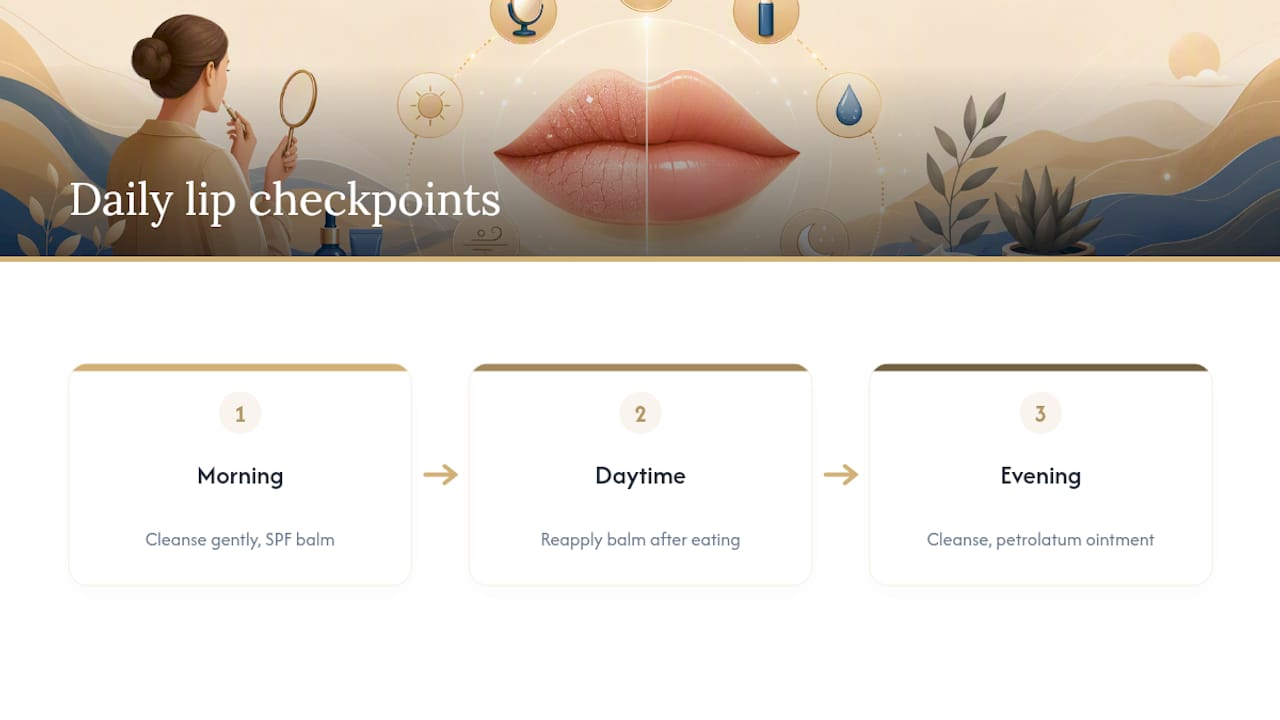
- Morning: apply an SPF lip balm before you leave the house, even on cloudy days
- Daytime: reapply after meals, coffee, or extended talking
- Evening: cleanse gently, then seal with a plain ointment before bed
- Dry months: run a humidifier in your bedroom to offset heated indoor air
- Cold or windy days: cover your lower face with a scarf when possible
- New cosmetics: introduce one product at a time so you can identify a reaction if peeling returns
If you consistently wake up with dry lips regardless of your evening routine, chronic mouth breathing or nasal congestion may be the real driver. Treating that upstream issue, whether it’s allergies or a structural airway problem, often does more than any balm.
Pro Tip: Keep your nighttime ointment on your nightstand, not in the bathroom. If you have to get up to find it, you won’t use it.
When Should You See a Dermatologist About Peeling Lips?
Home care handles most cases, but a few signs mean it’s time to get evaluated:
- Peeling or soreness that hasn’t improved after two to three weeks of consistent barrier care
- Cracks that are getting deeper, bleeding, or won’t close
- Pus, spreading redness, or warmth around the lips
- Fever or other symptoms beyond the lips themselves
A dermatologist will typically check for angular cheilitis, allergic contact reactions, fungal or bacterial infection, or sun-related damage, and may prescribe a topical steroid or antifungal depending on what they find. Bring a list of every lip and facial product you’ve used recently, along with a rough timeline of when the peeling started.
A Dermatologist-Style Routine You Can Actually Stick To
Break it into three checkpoints. Morning: cleanse gently, then apply an SPF lip balm before heading out. Daytime: reapply a bland, unscented balm as needed, especially after eating. Evening: cleanse again, then seal with a thick layer of petrolatum-based ointment for overnight occlusion.
Once peeling has fully resolved, cosmetics can come back into rotation. Wait until the skin looks and feels smooth, choose fragrance-free formulations first, and patch-test anything new on a small area before applying it to your whole mouth. Maisondovelle’s lip products, including the Lip Plumper, Lip Liner in Deep Coral, and Lip Liner in Antique Rose, fit this stage as gentle color options, not as treatments for active peeling.
Can Your Diet Cause Peeling Lips?
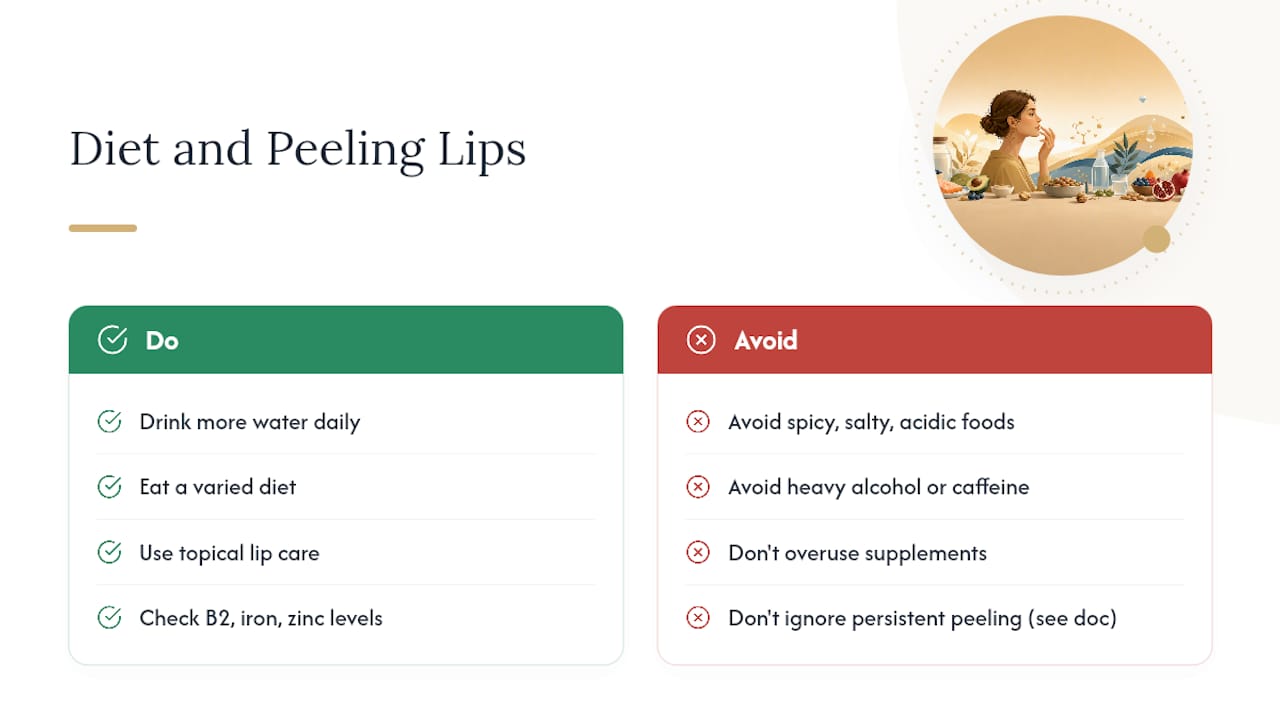
What you eat and drink shows up on your lips faster than almost anywhere else on your body, mostly through hydration and a handful of nutrients tied to skin repair. Dehydration is the most common dietary factor. If you’re not drinking enough water, the thin skin on your lips dries out before most other areas notice.
B vitamins, particularly riboflavin (B2), and iron support skin cell turnover and repair. Low intake or an underlying deficiency in either can show up as persistent dryness, cracking at the corners of the mouth, or slow healing that doesn’t respond to topical care alone. Zinc plays a similar supporting role in wound repair.
Spicy, salty, and acidic foods, think citrus, hot sauce, or heavily seasoned dishes, can sting already-compromised lip skin and slow healing, even though they don’t cause the initial peeling. Alcohol and caffeine both have a mild dehydrating effect with heavy use.
None of this means you need supplements to fix chapped lips. For most people, drinking more water and eating a reasonably varied diet resolves any dietary contribution within the same two to three week window as topical care. If peeling persists despite good hydration and a normal diet, that’s a signal to look at other causes rather than reach for more vitamins.
Medical Conditions That Cause Peeling Lips
Sometimes the cause isn’t weather or habit at all. A few underlying conditions are worth ruling out if standard barrier repair isn’t working.
Allergic and contact cheilitis happens when a specific product, whether toothpaste, lipstick, or a flavored balm, triggers a reaction. The Acibadem Hospitals Group notes that clinicians often ask patients to stop several suspect products at once, since eliminating one at a time can take too long to isolate the culprit.
Angular cheilitis shows up as cracking and redness specifically at the corners of the mouth, often linked to a yeast or bacterial infection that thrives in the moist folds there. It usually needs a targeted antifungal or antibacterial treatment rather than plain ointment alone.
Vitamin and mineral deficiencies, particularly B vitamins and iron, can present as chronic lip dryness and cracking that doesn’t respond to standard care.
Actinic cheilitis, caused by cumulative sun damage, mainly affects the lower lip and can look like persistent, scaly peeling that doesn’t heal the way ordinary chapped lips do. This one needs a dermatologist’s evaluation, since it’s considered a precancerous change.
Autoimmune conditions and certain medications, including some acne treatments and blood pressure drugs, can also cause chronic lip dryness as a side effect. If you started a new medication around the time peeling began, mention it at any appointment.
What Actually Moves the Needle on Peeling Lips
Most peeling-lips advice online overcomplicates a problem that has a boring solution: less product, applied more consistently, with almost nothing exciting in it. The instinct to reach for a minty balm or scrub off the flakes is understandable, but it works against you every time.
Barrier repair first, irritants out, sun and wind covered. Cosmetics belong in the picture again only after the skin has actually healed, and even then, sensitivity should guide what goes back on.
— Calvin
Gentle Lip Color for After Your Lips Heal
Certain lip products are formulated to be clean, cruelty-free, and suited to sensitive skin, which matters most in the weeks right after a peeling episode when your lips are still recovering their barrier.
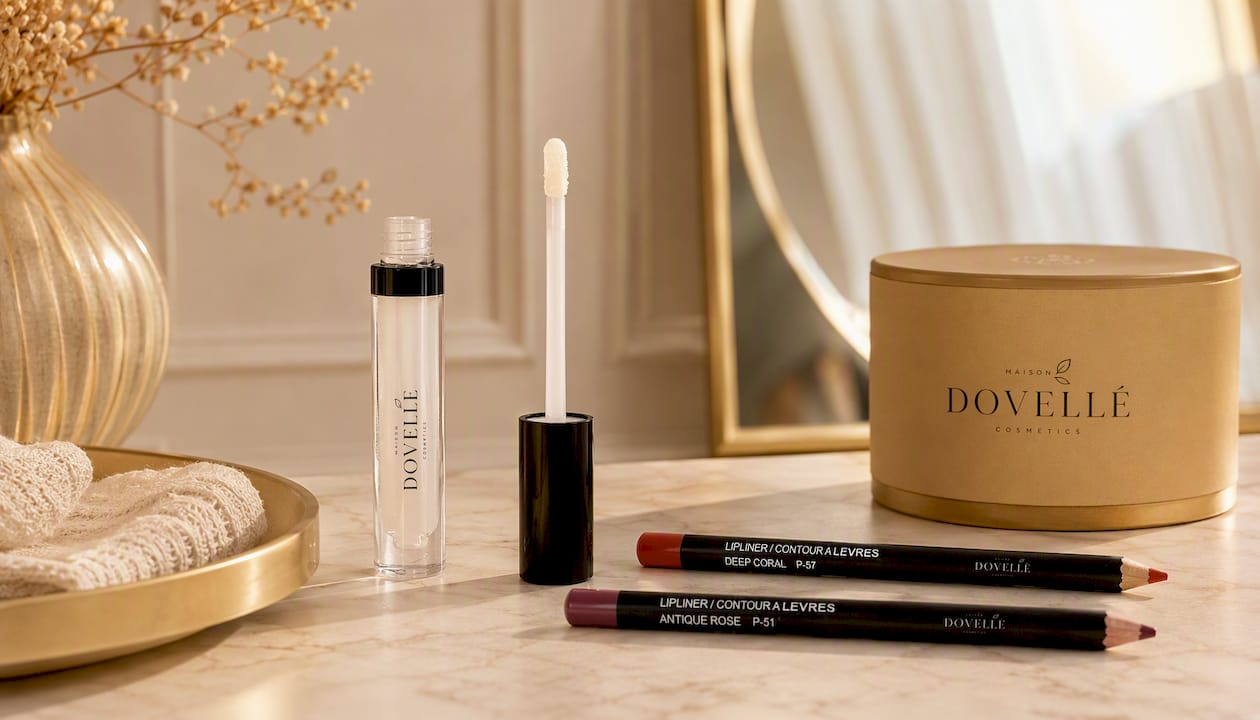
Once your skin feels smooth again, not just less flaky, you can bring color back in carefully. The Lip Plumper adds fullness without the tingling, minty ingredients that irritate healing skin. For definition, the Lip Liner in Deep Coral and Lip Liner in Antique Rose give you two everyday shade options formulated with sensitive skin in mind. None of this replaces the bland petrolatum ointment your lips need during active peeling. Think of these as your next step, not your first one. Browse the full lip collection when you’re ready to add color back, and check out the eye, face, and accessories lines while you’re there.
This article is general information, not a substitute for advice from a qualified doctor. Consult a qualified healthcare professional about your own circumstances before acting on anything here.
Sources
- Chapped Lips (Cheilitis): Causes, Treatment & Prevention
- Kiss chapped lips goodbye | Ohio State Health & Discovery
- 7 dermatologists’ tips for healing dry, chapped lips
- How To Get Rid of Chapped Lips: 6 Remedies
FAQ
What Is Peeling Lips a Symptom Of?
Peeling lips usually signal a damaged skin barrier from dryness, wind, sun, or licking, rather than one specific illness. Less commonly, it points to contact or allergic cheilitis, a vitamin deficiency, or an infection like angular cheilitis at the mouth corners.
What Deficiency Causes Lips to Peel?
Low intake of riboflavin (vitamin B2), iron, or zinc can contribute to persistent lip dryness and slow healing. Deficiency is rarely the sole cause; environmental and behavioral factors are far more common triggers of everyday peeling.
What Kind of Cream Is Good for Peeling Lips?
A bland, fragrance-free ointment built around petrolatum is the top choice for lip barrier repair, since it seals in moisture rather than adding a scent or tingle. Once lips have healed, gentler cosmetic options like Maisondovelle’s Lip Plumper can be layered back in for color and shine.
Should I Peel Dead Skin Off My Lips?
No. Picking or peeling loose skin tears the healthy tissue underneath and slows healing while raising infection risk. Let a petrolatum-based ointment soften the flakes so they shed naturally instead.