

Why Squalane Works: Non Comedogenic Face Oils for Acne Prone Skin
Squalane, high-linoleic sunflower or grapeseed oil, and jojoba are commonly regarded as among the lowest clogging risk options for acne-prone skin. “Non-comedogenic” on a label is marketing language, not a government guarantee, so treat it as a hint rather than a promise. Patch test any new oil for two to three days, start with a light amount, and check it against any retinoid or benzoyl peroxide already in your routine before adding it nightly.
TL;DR:
- Oils rich in linoleic acid, such as sunflower seed and grapeseed oil, support the skin barrier and are less likely to clog pores when used in lightweight formulas.
- Squalane resists oxidation and breakage into comedogenic peroxides, making it one of the safest options for acne-prone, sensitive, and oily skin types.
- Patch testing new oils for two to three days helps prevent reactions or breakouts, especially when layering with active ingredients like retinoids or benzoyl peroxide.
- The “non-comedogenic” label is unregulated and reflects branding intent, so ingredient recognition and understanding of fatty-acid profiles are more reliable.
- Use oils with known low risk, such as jojoba and hemp seed oil, primarily in evening routines to minimize oxidation and inflammation risks during daytime exposure.
Table of Contents
- What “Non-Comedogenic Face Oils” Actually Means
- The Real Science Behind Clogged Pores
- Which Oils Are Actually Safe: A Practical Shortlist
- Using Face Oils Without Triggering Breakouts
- How Maisondovelle Designs Around This Science
- Why the Label Obsession Misses the Point
- Simple Swaps for Oil-Prone and Acne-Prone Skin
- Sources
- FAQ
What “Non-Comedogenic Face Oils” Actually Means
The term “non-comedogenic” has no legal definition in the United States. The FDA does not regulate the phrase, which means any brand can print it on a bottle regardless of what independent testing might show. It signals intent, not proof.
That doesn’t make the label useless. The American Academy of Dermatology recommends that people with acne-prone or oily skin favor products marked “oil-free,” “non-comedogenic,” or “won’t clog pores,” while cautioning that these terms aren’t standardized. The label is a starting filter, not a final verdict. The full ingredient list still decides the outcome.
When you’re reading a bottle, check for these signals before you trust the front-label claim:
- Look for named oils you recognize as low-risk, like squalane, jojoba, or sunflower seed oil, high on the ingredient list.
- Watch for heavy butters and waxes (shea, cocoa butter, coconut oil) positioned near the top, since concentration matters as much as the ingredient itself.
- Scan for added fragrance, a common irritant trigger even in otherwise well-formulated oils.
- Check texture claims against your skin type. A rich “nourishing” oil marketed for dry skin may not suit acne-prone or oily skin, whatever the front label says.
The Real Science Behind Clogged Pores
Comedones form when dead skin cells, sebum, and debris get trapped inside a hair follicle. Oils contribute to this in one of two ways: by sitting on the surface and physically slowing normal shedding, or by oxidizing into byproducts that trigger inflammation inside the follicle.
Fatty-acid profile drives most of the difference between oils that behave well on acne-prone skin and oils that don’t. A peer-reviewed review of botanical oils found that oils rich in linoleic acid, like sunflower and grapeseed, tend to preserve the skin’s lipid barrier and support hydration more reliably than oils dominated by oleic acid. Linoleic acid is thinner and more similar to the fatty acids naturally present in healthy sebum, so skin processes it without the same buildup risk associated with heavier, oleic-dominant oils in some contexts.
Oxidation is the other half of the equation, and it’s the part most comedogenicity charts ignore entirely. Squalene, a naturally unsaturated lipid, degrades into squalene peroxides when exposed to air, light, and heat. Research on skin lipid oxidation links these peroxide byproducts directly to comedone formation and localized inflammation. A 2025 study on skin lipid metabolism found that oxidized lipids can activate inflammatory pathways, including COX-2 and IL-1β, inside oil-producing skin cells, which helps explain why an oil that looks fine on a comedogenicity scale can still trigger breakouts once it’s been sitting in a jar exposed to light for months. Squalane, the hydrogenated and fully saturated version of squalene, resists that oxidation pathway almost entirely, which is why it holds up so well for daytime wear and long-term storage.

Which Oils Are Actually Safe: A Practical Shortlist
Comedogenicity ratings (the familiar 0 to 5 scale dermatologists sometimes cite) were built from decades-old rabbit-ear testing and rarely account for how an ingredient behaves inside a modern, multi-ingredient formula. Treat the following as a chemistry-informed shortlist, not gospel.
- Squalane. Fully saturated and photostable, it resists the oxidation pathway that drives breakouts in more reactive oils. It’s the closest thing to a universal starter oil for acne-prone, sensitive, and oily skin alike.
- Grapeseed oil. High in linoleic acid and notably thin in texture, it absorbs fast without leaving a greasy film. Watch the full formula, though. Some grapeseed products blend in high-oleic oils that dilute the benefit.
- Sunflower seed oil. Another linoleic-rich option with a long track record in barrier-support research. It sinks in quickly and layers well under other actives.
- Jojoba oil. Technically a liquid wax, jojoba’s structure closely mimics human sebum, which lets it absorb fast and helps balance oily skin instead of adding to the shine.
- Hemp seed oil. Also, linoleic-dominant and known for a soothing feel on inflamed or reactive skin, making it a reasonable pick for anyone dealing with active irritation.
- Rosehip oil. Useful for fading post-inflammatory marks and improving texture over time, but it oxidizes faster than the options above. Patch test first and keep it in the evening rotation, away from direct sun exposure.
Pro Tip: Check where an oil sits on the ingredient list, not just whether it’s named. An oil listed fifth out of six ingredients is doing far less work than the same oil listed first.
Using Face Oils Without Triggering Breakouts
Patch testing takes two to three days, not two minutes. Apply a small amount to your jawline or inner forearm, then wait 48 to 72 hours before checking for redness, bumps, or itching. Skipping this step is the single most common reason people blame “an oil” for a breakout that a slower rollout would have caught.
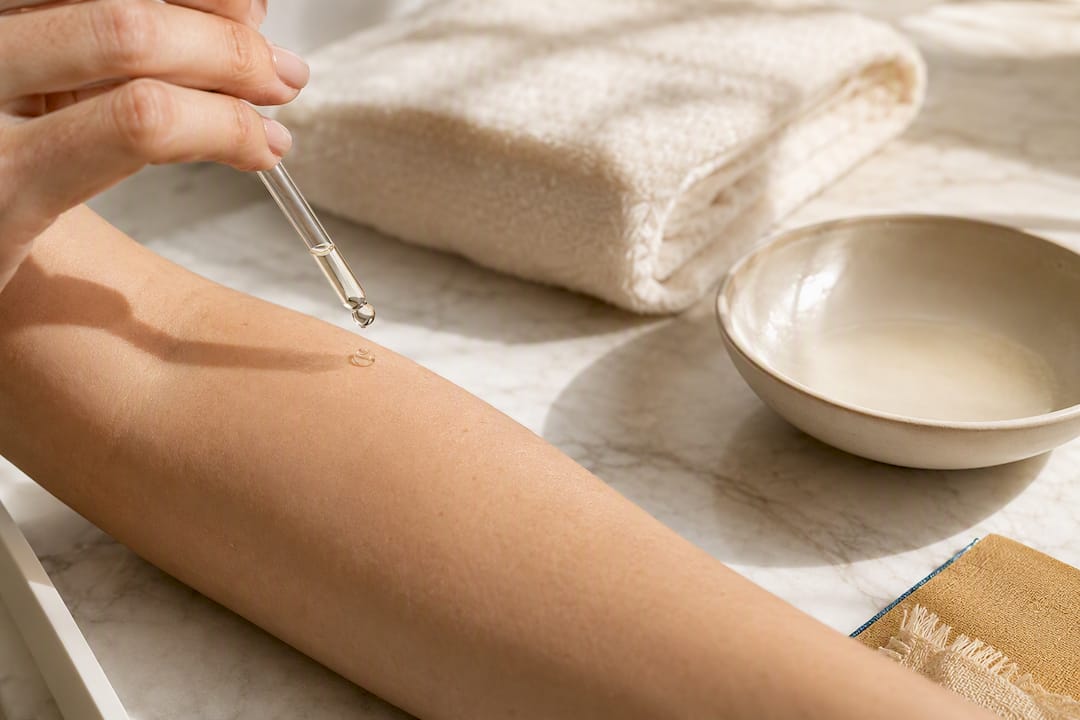
Layering order matters more than most routines account for. Apply a humectant like hyaluronic acid first, follow with a lightweight moisturizer, then seal with a few drops of oil if your skin still feels tight. Applying oil to slightly damp skin also helps it spread thinner and absorb faster instead of sitting on the surface.
Timing depends on the oil. Linoleic-rich and saturated oils like squalane tolerate daytime wear fine under sunscreen, but oxidation-prone oils like rosehip do better at night, away from UV exposure that accelerates breakdown.
- Wait at least a few minutes after applying retinoids or benzoyl peroxide before layering oil, and use a moisturizer as a buffer if your skin feels irritated.
- Never apply a new oil on the same night you’re testing a new active ingredient. You won’t know which one caused a reaction.
- Reduce oil use to every other night if you notice mild flaking from retinoid use, rather than stopping the retinoid entirely.
Pro Tip: If you develop a cluster of new breakouts, persistent redness, or anything resembling contact dermatitis within a week of adding an oil, stop using it and give your skin two weeks before reintroducing anything new.
How Maisondovelle Designs Around This Science
Maisondovelle builds its face products around the same principle driving this article: light emollients that hydrate without heavy occlusion outperform rich, occlusive formulas for sensitive and oil-prone skin. That’s the logic behind the brand’s Oil Control Hydrator, Anti-aging Rose Gold Oil, and Oil Control Setting Spray, each formulated to work with skin chemistry rather than mask it.
Product decisions at Maisondovelle follow a few consistent rules:
- Prioritize ingredients with documented barrier support over ingredients chosen for scent or texture alone.
- Keep formulas free of heavy waxes and butters that sit on the surface longer than necessary.
- Test new formulas against sensitive-skin tolerance before wider release.
Why the Label Obsession Misses the Point
Most advice on this topic treats “non-comedogenic” like a certification, something a product either has or doesn’t. That framing is backwards. The label tells you what a brand hopes you’ll believe, not what the fatty-acid profile or oxidation behavior of the formula will actually do on your skin over the following weeks.
What the science supports is narrower and more useful: linoleic-rich oils tend to behave better on oily and acne-prone skin than oleic-heavy ones, and saturated, photostable oils like squalane avoid the oxidation pathway that turns an otherwise fine ingredient into a breakout trigger. That’s a chemistry argument, not a marketing one.
If you take one thing from this, prioritize ingredient literacy over label trust. Learn to spot squalane, linoleic acid, and jojoba on a label before you look at the front-of-bottle claim. The claim might be accurate. It might also be printed on a bottle that’s chemically identical to one without it.
— Miranda Carmichael
Simple Swaps for Oil-Prone and Acne-Prone Skin
If you’re building a routine around the chemistry covered above, Maisondovelle carries three products that map directly onto it. The Oil Control Hydrator is designed for oily and acne-prone skin that still needs hydration without added shine, and it works well applied morning and night under sunscreen during the day.
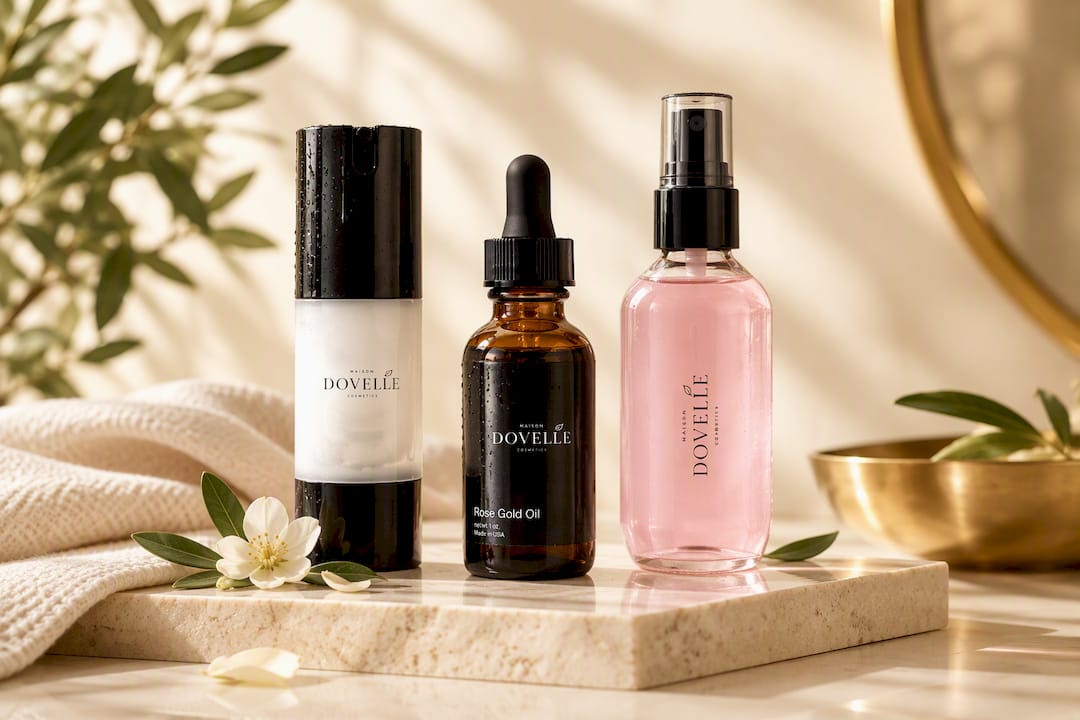
For evening use, the Anti-aging Rose Gold Oil is formulated for nighttime application, when UV exposure isn’t a factor and richer textures can work without the oxidation concerns tied to daytime wear. Patch test it the same way you would any new oil, on your jawline for two to three days, before working it into a full nightly routine. To manage midday shine without adding more product weight, the Oil Control Setting Spray layers over your morning routine and controls surface oil through the afternoon. Together, the three cover morning hydration, evening repair, and daytime touch-ups. Browse the full FACE collection to see how each product fits into a complete routine, or check current pricing and availability directly on the product pages.
Sources
- Moisturizer: Why you may need it if you have acne — American Academy of Dermatology
- Is it a cosmetic, a drug, or both? — U.S. Food and Drug Administration
- The Enigma of Bioactivity and Toxicity of Botanical Oils for Skin Care — PMC
FAQ
Which Oil Has the Lowest Comedogenic Rating?
Squalane consistently rates among the lowest-risk options because it’s fully saturated and resists the oxidation that drives clogged pores in other oils. Jojoba and high-linoleic oils like sunflower or grapeseed follow closely behind, especially in lightweight formulas.
What Face Oil Is Best for Acne-Prone Skin?
Squalane and linoleic-rich oils like grapeseed, sunflower seed, and hemp seed oil tend to suit acne-prone skin best, since their fatty-acid profile supports the skin barrier instead of adding to surface buildup. Maisondovelle’s Oil Control Hydrator applies this same logic in a lightweight, non-occlusive formula.
What Oils Don’t Cause Breakouts?
No oil is universally breakout-proof, since individual skin tolerance varies, but squalane, jojoba, grapeseed, sunflower, and hemp seed oil carry the lowest general risk. The AAD notes that “non-comedogenic” labeling helps narrow choices but isn’t a legal guarantee, so patch testing still matters.
Are Non-Comedogenic Facial Massage Oils Available?
Yes. Lightweight oils like squalane, jojoba, and grapeseed work well for facial massage since they absorb quickly and don’t leave a heavy residue that traps debris in the follicle. Apply a thin layer and avoid oils with added fragrance if your skin is reactive, since massage increases product contact time on the skin.